
PHH Ration Card Telangana — What is PHH, Benefits & Eligibility
Last Updated: June 25, 2026
Information Source: Based on National Food Security Act 2013 and Telangana Civil Supplies Department guidelines
Complete guide to understanding PHH (Priority Household) ration cards in Telangana. Learn the full form of PHH, what PHH category means, how it differs from BPL and AAY cards, eligibility criteria, monthly ration entitlement per unit, benefits, and how to check if your card is PHH category.
📑 Table of Contents
The term PHH appears frequently on ration cards across Telangana, leaving many beneficiaries confused about what it means, how it differs from traditional BPL (Below Poverty Line) classification, and what benefits they’re entitled to under this category. PHH is not just an administrative label—it represents a specific classification under the National Food Security Act (NFSA) 2013 that determines your monthly ration entitlement, subsidy rates, and access to various welfare schemes.
Understanding PHH is crucial because it directly affects the quantity of subsidized food grains you receive, the price you pay at Fair Price Shops, your eligibility for healthcare programs like Aarogyasri, education fee waivers for children, pension schemes, housing assistance, and numerous other government benefits. Despite being a central component of India’s food security framework, there remains significant confusion about what PHH means, whether it’s the same as BPL, and how it compares to other ration card categories like AAY (Antyodaya Anna Yojana) and APL (Above Poverty Line).
This comprehensive guide clarifies all aspects of PHH ration cards in Telangana, from the full form and official definition to practical implications for beneficiaries. Whether you’re checking your ration card and seeing “PHH” for the first time, wondering if you qualify for this category, or trying to understand the relationship between PHH and BPL classifications, this guide provides clear, authoritative answers based on NFSA provisions and Telangana government implementation. With Telangana’s Electronic Public Distribution System (EPDS) now fully operational, understanding your PHH status is more important than ever for accessing digital services and tracking your entitlements online.
PHH Full Form & Meaning
📖 PHH Full Form
PHH = Priority Household
PHH stands for Priority Household, an official category established under the National Food Security Act (NFSA) 2013 to identify and serve families that require government support for food security but don’t fall into the extremely poor “Antyodaya” category.
What Does “Priority Household” Mean?
The term “Priority Household” signifies that the family has been identified by the government as requiring priority access to subsidized food grains and welfare services. It indicates economic vulnerability necessitating state support, but with income levels slightly above the extremely poor AAY category. Priority Households form the backbone of India’s Public Distribution System, representing the largest beneficiary group under NFSA.
Origin & Legal Framework
The PHH classification was introduced through the National Food Security Act 2013, which mandated a shift from the traditional BPL/APL system to a more inclusive and transparent framework. The Act required states to identify:
| NFSA Category | Coverage Mandate | Implementation in Telangana |
|---|---|---|
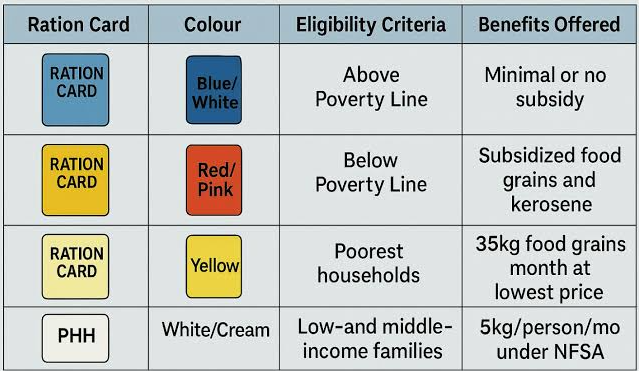
| Priority Household (PHH) | Up to 75% of rural + 50% of urban population | Implemented as pink ration cards (BPL category) |
| Antyodaya (AAY) | Poorest of poor – separate allocation | Yellow/golden cards with fixed 35 kg quota |
| Non-Priority (APL) | Remaining population above NFSA coverage | White cards with standard subsidy |
PHH in Different Languages
English
Priority Household (PHH)
Telugu
ప్రాధాన్యత కుటుంబం (Priority Family)
Hindi
प्राथमिकता परिवार (Prathamikta Parivar)
🔑 Key Terminology Clarifications
- “Scheme PHH”: Refers to the Priority Household scheme under NFSA – the legal framework governing this category
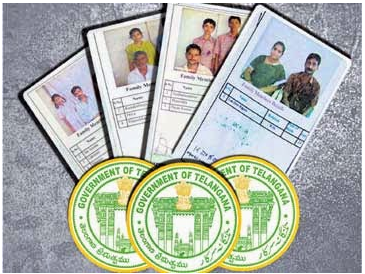
- “PHH Ration Card”: The physical card issued to Priority Household families (pink card in Telangana)
- “PHH Category”: The classification status indicating family belongs to priority beneficiary group
- “PHH Unit”: Each individual family member counted for calculating monthly entitlement (5 kg per unit)
- “PHH Beneficiary”: Any family member listed on a Priority Household ration card
The PHH designation appears on your ration card, usually printed near the card number or in the category field. In Telangana, PHH cards are color-coded pink to distinguish them from white (APL) and yellow (AAY) cards. Check your ration card type to understand your specific category.
What is PHH Category in Ration Card?
PHH category in ration cards represents the middle tier in India’s three-level food security system. Understanding this category requires examining both its official definition under NFSA and its practical implementation in Telangana’s ration distribution framework.
Official Definition of PHH
According to the National Food Security Act 2013, Priority Household (PHH) encompasses all families identified by states as requiring subsidized food grains for food security, excluding those in the Antyodaya (extremely poor) category. The Act provides broad parameters while allowing states flexibility in identification based on local economic conditions and poverty indicators.
PHH Category Characteristics
Family-Based Classification
PHH status applies to entire household unit, not individuals. All family members living together and sharing meals are counted as one PHH unit with combined entitlement.
Income-Based Eligibility
Primary criterion is household income below state-defined threshold (₹1,50,000 annually in Telangana as of 2026), though other vulnerability factors also considered.
Guaranteed Entitlement
Legal right to receive minimum 5 kg food grains per member per month at subsidized rates – not dependent on supply availability or dealer discretion.
Priority Access
Preferential treatment in government welfare schemes including healthcare, education, housing, and social security programs beyond just food distribution.
How PHH Category is Determined
Telangana government uses multiple parameters to identify PHH families:
| Identification Criteria | Description | Weight in Decision |
|---|---|---|
| Annual Income | Total household income from all sources | Primary factor – must be below ₹1,50,000 |
| Occupation Type | Daily wage labor, small farming, irregular employment | Supporting factor indicating economic instability |
| Land Ownership | Landless or owning less than 2.5 acres irrigated land | Indicator of asset poverty |
| Housing Status | Kuccha house, rented accommodation, slum dwelling | Living condition assessment |
| Social Category | SC/ST in rural areas, OBC with low income | Priority consideration for vulnerable groups |
| Family Composition | Widow-headed, disabled member, single parent | Vulnerability multiplier |
⚠️ Common Misconception About PHH
Myth: “PHH is different from BPL – they are two separate categories.”
Reality: PHH is the national NFSA term for what states traditionally called BPL (Below Poverty Line). In Telangana:
- PHH = Official NFSA category name
- BPL = Traditional state classification term
- Pink Card = Physical card color for this category
- All three refer to the SAME category – families with income below poverty line receiving priority food security benefits
The confusion arises because NFSA introduced “Priority Household” terminology while states continued using familiar “BPL” term. They are synonymous, not different categories.
PHH Card Features in Telangana
When you receive a PHH ration card in Telangana, it includes:
- Card Number: Unique 10-12 digit FSC (Food Security Card) identification number
- Category Marking: “PHH” or “Priority Household” or “BPL” printed in category field
- Pink Color: Card is rose/pink colored for easy visual identification at Fair Price Shops
- Family Details: Names and Aadhaar numbers of all members with their individual photos
- Unit Count: Total number of units (family members) determining monthly entitlement
- FPS Assignment: Assigned Fair Price Shop code and address for ration collection
- Commodity Entitlement: Listed quantities for rice, wheat, sugar, and kerosene (if applicable)
You can verify your PHH status and check complete card details online through FSC search by Aadhaar on the EPDS portal.
PHH vs BPL vs AAY — Complete Explanation
The relationship between PHH, BPL, and AAY creates significant confusion among ration card holders. This section provides definitive clarification on how these terms relate to each other and their practical differences.
The Core Relationship: PHH and BPL
✓ Critical Understanding
PHH = BPL in Telangana Context
Priority Household (PHH) is the official National Food Security Act term for what Telangana and other states traditionally classified as Below Poverty Line (BPL). They are NOT two different categories—they are different names for the same category:
- BPL: Traditional state-level classification (still commonly used)
- PHH: Official NFSA 2013 national terminology (legally correct term)
- Pink Card: Physical implementation in Telangana (card color identification)
Your pink ration card in Telangana may show “PHH” or “BPL” or both—all referring to the same Priority Household category under NFSA.
Complete Comparison: PHH vs AAY vs APL
| Aspect | PHH (Priority Household) | AAY (Antyodaya) | APL (Above Poverty Line) |
|---|---|---|---|
| Full Form | Priority Household | Antyodaya Anna Yojana | Above Poverty Line |
| Also Known As | BPL (Below Poverty Line) | Poorest of Poor | General Category |
| Card Color (Telangana) | Pink/Rose | Yellow/Golden | White |
| Economic Status | Below poverty line but above destitution | Extreme poverty, destitute, homeless | Above poverty line, stable income |
| Income Range (Annual) | ₹50,000 to ₹1,50,000 | Below ₹50,000 or no regular income | ₹1,50,000 to ₹5,00,000 |
| NFSA Coverage | Up to 75% rural + 50% urban | Fixed quota – poorest families only | Not covered under NFSA |
| Rice Entitlement | 5 kg per family member | 35 kg per household (fixed) | 5 kg per member (lower subsidy) |
| Subsidized Rice Price | ₹1 per kg | ₹1 per kg or FREE | ₹2-3 per kg |
| 4-Member Family Gets | 20 kg rice for ₹20 | 35 kg rice for ₹35 (or free) | 20 kg rice for ₹40-60 |
| Healthcare Benefits | Full Aarogyasri coverage | Full coverage + highest priority | Limited coverage |
| Education Fee Waiver | Complete or substantial waiver | 100% fee waiver | Partial or no waiver |
| Pension Eligibility | Eligible for Aasara, old age pensions | Highest priority, automatic inclusion | Generally not eligible |
| Housing Schemes | High priority for 2BHK, Indiramma | Highest priority, first preference | Low priority or ineligible |
| Typical Beneficiaries | Daily wage laborers, small farmers, low-income workers | Destitute, homeless, disabled without support, elderly alone | Salaried employees, stable business owners, property holders |
Visual Hierarchy of Ration Card Categories
AAY (Highest Benefits)
Annual Income: Below ₹50,000
Monthly Rice: 35 kg household
Price: ₹1/kg or free
Priority: Maximum
Population: ~10-15%
PHH/BPL (High Benefits)
Annual Income: ₹50,000-₹1,50,000
Monthly Rice: 5 kg per member
Price: ₹1/kg
Priority: High
Population: ~55-60%
APL (Standard Benefits)
Annual Income: ₹1,50,000-₹5,00,000
Monthly Rice: 5 kg per member
Price: ₹2-3/kg
Priority: Standard
Population: ~25-30%
Why the Terminology Change: BPL to PHH?
The National Food Security Act 2013 replaced “BPL” with “Priority Household” for several reasons:
- Stigma Reduction: “Below Poverty Line” carried negative social connotation; “Priority Household” is dignity-preserving
- Legal Clarity: PHH provides specific legal definition under NFSA, while BPL varied by state
- Inclusion Emphasis: “Priority” focuses on government’s duty to serve, not family’s poverty status
- Rights-Based Approach: PHH framing emphasizes legal entitlement rather than welfare charity
- Uniformity: Single national terminology replaces multiple state-specific terms
🤔 Common Questions Clarified
Q: Is PHH better than BPL?
A: They are the same category—PHH is simply the newer official term for BPL. No difference in benefits.
Q: Should I apply for PHH or BPL card?
A: Apply for “BPL” or “PHH” or “Pink Card”—all refer to the same category. Application forms may use any of these terms.
Q: Can I convert my BPL card to PHH?
A: No conversion needed—your existing BPL card IS a PHH card under NFSA. The category is the same regardless of terminology used.
For complete details on all ration card categories in Telangana, see our comprehensive guide: Types of Ration Cards in Telangana.
PHH Ration Card Eligibility Criteria
To qualify for PHH (Priority Household) ration card in Telangana, families must meet specific criteria established under the National Food Security Act 2013 and implemented through state Civil Supplies Department guidelines.
Primary Eligibility Requirements for PHH
| Eligibility Factor | Requirement for PHH Category | Verification Method |
|---|---|---|
| Annual Household Income | Below ₹1,50,000 from all sources combined | Income certificate from Tahsildar/MRO |
| Residency | Permanent resident of Telangana for minimum 1 year | Address proof – electricity bill, Aadhaar, rent agreement |
| Economic Status | Below poverty line but above extreme destitution | Income certificate + occupation details |
| Existing Cards | Must not hold ration card in any other state | Declaration + inter-state verification |
| Aadhaar Linking | All family members must have Aadhaar cards | Aadhaar numbers verified via UIDAI database |
Automatic Inclusion Categories for PHH
Certain vulnerable groups receive automatic Priority Household classification regardless of strict income criteria:
Landless Agricultural Laborers
Families dependent entirely on daily wage agricultural work without own land
Women-Headed Households
Families headed by widows, divorced, separated, or single women with dependents
Disabled Person Headed
Households where primary earner has 40%+ disability certificate
Elderly Without Support
Senior citizens (60+ years) living alone without earning family members
Homeless/Slum Dwellers
Families living in kuccha houses, slums, or without permanent shelter
SC/ST Rural Families
Scheduled Caste/Tribe families in rural areas with irregular income
PHH Income Limits by Family Size (2026)
| Family Members | Maximum Annual Income | Approximate Monthly Income | PHH Qualification |
|---|---|---|---|
| 1-2 members | Below ₹1,00,000 | Below ₹8,333/month | ✓ Qualifies for PHH |
| 3-4 members | Below ₹1,20,000 | Below ₹10,000/month | ✓ Qualifies for PHH |
| 5-6 members | Below ₹1,50,000 | Below ₹12,500/month | ✓ Qualifies for PHH |
| 7+ members | Below ₹1,50,000 | Below ₹12,500/month | ✓ Qualifies for PHH |
Who CANNOT Get PHH Card
- Government Employees: Regular state/central government employees and their families
- Income Tax Payers: Anyone who files income tax returns (ITR)
- High-Income Earners: Annual household income above ₹1,50,000
- Large Property Owners: Owning substantial agricultural land (>2.5 acres irrigated)
- Vehicle Owners: Owners of four-wheeled motorized vehicles (cars, SUVs) excluding tractors
- Professional Tax Payers: Doctors, lawyers, chartered accountants, engineers in private practice
- Commercial Establishments: Owners of shops, businesses with significant annual turnover
⚠️ PHH vs AAY Eligibility Boundary
If your annual household income is below ₹50,000 or you’re destitute/homeless, you likely qualify for AAY (Antyodaya) instead of PHH, which provides even higher benefits (35 kg fixed quota per household). However, AAY has limited seats and stricter verification. Many extremely poor families receive PHH cards if AAY slots are full in their area.
Check complete eligibility criteria for all card types: Who is Eligible for FSC Card in Telangana.
Benefits Under PHH Scheme
PHH (Priority Household) cardholders in Telangana receive comprehensive benefits across multiple sectors, making it one of the most valuable government welfare categories for economically vulnerable families.
1. Food Security Benefits Under PHH
| Commodity | PHH Monthly Entitlement | Subsidized Price | Market Value |
|---|---|---|---|
| Rice (Fine Quality) | 5 kg per family member | ₹1 per kg | ₹40-50 per kg |
| Wheat | 2 kg per household | ₹2 per kg | ₹30-35 per kg |
| Sugar | 1 kg per household | ₹13.50 per kg | ₹40-45 per kg |
| Kerosene (if entitled) | 3-5 liters per household | ₹15-20 per liter | ₹60-70 per liter |
2. Healthcare & Medical Benefits
Aarogyasri Health Coverage
Free healthcare up to ₹5 lakhs per year for specified surgeries, treatments, and hospitalization at empanelled hospitals
Free Generic Medicines
Essential medicines at zero or minimal cost at government hospitals and Jan Aushadhi Kendras
108 Emergency Ambulance
Free emergency ambulance service available 24/7 across Telangana for medical emergencies
Maternal & Child Care
Free antenatal, delivery, postnatal care with nutritional supplements for pregnant women and infants
3. Education & Scholarship Benefits
- Fee Reimbursement: Complete or substantial tuition fee waiver in government schools and colleges
- Free Textbooks: No-cost textbooks and study materials up to intermediate level
- Mid-Day Meals: Nutritious free meals for children in government schools
- Pre-Matric Scholarships: Financial assistance for students from Class 1 to Class 10
- Post-Matric Scholarships: Higher education support for college and professional courses
- Hostel Fee Waiver: Subsidized accommodation in government hostels
4. Social Security & Pension Schemes
- Aasara Pension: ₹2,016 per month for eligible widows, disabled persons, elderly
- Old Age Pension: Monthly support for senior citizens above 65 years from PHH families
- Widow Pension: Financial assistance for widows with PHH card
- Disability Pension: Monthly support for persons with disabilities
5. Housing & Infrastructure
- 2BHK Housing Scheme: Priority allotment of government-constructed houses
- Indiramma Housing: Financial assistance ₹1.5-3 lakhs for house construction
- Toilet Construction Subsidy: Support under Swachh Bharat Mission
- LPG Connection: Ujjwala Yojana providing free LPG connection
✓ Total Annual Value of PHH Benefits
For a typical 4-member PHH family in Telangana:
- Food subsidy: ₹12,000-15,000
- Healthcare (if utilized): ₹20,000-50,000
- Education benefits: ₹5,000-15,000
- Pension (if eligible): ₹24,192
- Other schemes: ₹10,000-30,000
Total Estimated Value: ₹71,000 to ₹1,34,000 annually
PHH Ration Entitlement Per Unit
Understanding “per unit” entitlement is crucial for PHH cardholders. Under NFSA, each family member counts as one “unit” and the total household entitlement is calculated by multiplying units by the per-unit allocation.
What is a “Unit” in PHH Context?
📊 PHH Unit Definition
1 Unit = 1 Family Member
Every individual listed on your PHH ration card counts as one unit, regardless of age. Infants, children, adults, and elderly all count equally as one unit each for entitlement calculation purposes.
PHH Entitlement Formula
Monthly Rice Entitlement = Number of Units × 5 kg
PHH Entitlement Examples by Family Size
| Family Size (Units) | Monthly Rice Entitlement | Cost at PHH Rate (₹1/kg) | Market Value (₹45/kg) | Monthly Savings |
|---|---|---|---|---|
| 1 member (1 unit) | 5 kg | ₹5 | ₹225 | ₹220 |
| 2 members (2 units) | 10 kg | ₹10 | ₹450 | ₹440 |
| 3 members (3 units) | 15 kg | ₹15 | ₹675 | ₹660 |
| 4 members (4 units) | 20 kg | ₹20 | ₹900 | ₹880 |
| 5 members (5 units) | 25 kg | ₹25 | ₹1,125 | ₹1,100 |
| 6 members (6 units) | 30 kg | ₹30 | ₹1,350 | ₹1,320 |
| 8 members (8 units) | 40 kg | ₹40 | ₹1,800 | ₹1,760 |
PHH vs AAY Entitlement Comparison
PHH System
Per-Unit Based (5 kg/member)
- Scales with family size
- Larger families get more rice
- Example: 8-member family = 40 kg
- Better for large families (6+ members)
AAY System
Fixed Quota (35 kg/household)
- Does not scale with size
- Fixed 35 kg regardless of members
- Example: 8-member family = still 35 kg
- Better for small families (1-7 members)
⚠️ Crossover Point: PHH vs AAY
For families with exactly 7 members, both PHH and AAY provide same rice quantity (35 kg). Beyond 7 members, PHH provides MORE rice than AAY. This is why some large families prefer PHH over AAY despite AAY’s “poorest” designation.
Additional PHH Commodity Entitlements
Beyond rice, PHH households receive:
- Wheat: 2 kg per household per month (not per unit)
- Sugar: 1 kg per household per month (not per unit)
- Kerosene: 3-5 liters per household (only if entitled based on card type)
Track your monthly entitlement and collection history through online FSC search.
How to Check if Your Card is PHH
Not sure if your ration card is PHH category? Here are multiple methods to verify your card classification:
Method 1: Check Physical Ration Card
-
Look for Card Color
In Telangana, PHH cards are pink/rose colored. If your card is pink, it’s PHH. White cards are APL, yellow/golden cards are AAY.
-
Check Category Field
Find the “Category” or “Type” field on your card. It will show one of these terms indicating PHH status:
- “PHH” or “Priority Household”
- “BPL” or “Below Poverty Line”
- “Priority” category marking
-
Verify Subsidy Rate
PHH cards show rice rate of ₹1 per kg. If your card indicates ₹2-3 per kg, it’s APL, not PHH.
Method 2: Online Verification via EPDS Portal
-
Visit EPDS Telangana Portal
Go to epdstelangana.cgg.gov.in and select “FSC Search” or “Ration Card Search” option.
-
Enter Search Details
Search using your FSC number, Aadhaar number, or mobile number. Complete guide: How to Check FSC Status.
-
View Card Category
Once your card details appear, look for the “Category” field. It will explicitly show “PHH” or “Priority Household” or “BPL” if you have PHH card.
-
Check Entitlement Details
PHH cards show “5 kg per member” entitlement. AAY shows “35 kg per household”. This confirms your category.
Method 3: Check at Fair Price Shop
Visit your assigned FPS and ask the dealer to show your card category in the EPOS device. The device displays:
- Your FSC card number
- Category: PHH/BPL or AAY or APL
- Monthly entitlement per commodity
- Current month balance remaining
Method 4: Download Digital Ration Card
Download your digital ration card PDF from EPDS portal. The downloaded card clearly shows category marking. See: Ration Card Download Guide.
🔍 Quick PHH Category Identifier
Answer these questions to know if you have PHH card:
Common Confusion & Clarifications
PHH category generates numerous questions and misconceptions. Here are the most common points of confusion with clear explanations:
Confusion: PHH vs BPL Different?
Question: “My card says BPL but government notice mentions PHH. Do I need to convert?”
Clarification: NO conversion needed. PHH and BPL are the same category with different terminology. NFSA uses “PHH”, states use “BPL”. Your BPL card IS a PHH card. No action required.
Confusion: PHH Means Scheme Name?
Question: “What is the PHH scheme? How do I apply for PHH scheme separately?”
Clarification: “PHH Scheme” refers to the Priority Household category under NFSA, not a separate program. When you apply for a BPL ration card, you’re automatically applying for PHH. There’s no separate PHH scheme application.
Confusion: PHH Better Than BPL?
Question: “Should I upgrade from BPL to PHH for better benefits?”
Clarification: They’re identical—same benefits, same subsidies, same eligibility. “PHH” is simply the official NFSA term for “BPL”. No upgrade possible or necessary because they’re the same category.
Confusion: PHH Card Color
Question: “My PHH card is white colored, not pink. Is it wrong?”
Clarification: If card is white, it’s likely APL, not PHH—despite what category field says. Pink color specifically indicates PHH/BPL in Telangana. Check with Civil Supplies office for category correction if mismatch exists.
Confusion: PHH Per Unit Meaning
Question: “What does 5 kg per unit mean? How many units do I get?”
Clarification: “Unit” = family member. If you have 4 family members, you have 4 units. Each unit gets 5 kg rice, so total = 4 × 5 = 20 kg monthly. Count all members listed on your card.
Confusion: PHH vs AAY Which Better?
Question: “I have PHH but neighbor has AAY. Should I apply for AAY instead?”
Clarification: AAY provides more rice ONLY if family has 7 or fewer members (35 kg fixed). For 8+ member families, PHH provides more. Also, AAY requires extreme poverty proof—most families don’t qualify. PHH is appropriate for BPL families.
⚠️ Most Misunderstood Aspect of PHH
Misconception: “PHH is a new government scheme launched recently, different from old BPL system.”
Reality: PHH is not new—it was established in 2013 with NFSA. It’s simply the national legal term for what was called BPL. States phased in the terminology over years, creating confusion. In Telangana:
- Pre-2013: Called “BPL cards”
- Post-2013: Same cards now called “PHH” under NFSA
- Common usage: People still say “BPL”, officials say “PHH”
- Result: Identical category, two names causing unnecessary confusion
For more troubleshooting assistance, visit: FSC Search Problems & Solutions.
Frequently Asked Questions About PHH
The full form of PHH in ration card is Priority Household. This is the official category name under the National Food Security Act (NFSA) 2013 for families requiring subsidized food grains who are below the poverty line but above extreme destitution levels. Priority Household indicates that the government has identified the family as requiring priority access to food security benefits and welfare schemes. In Telangana, PHH cards are issued as pink-colored ration cards and the category is synonymous with BPL (Below Poverty Line) classification used traditionally by states before NFSA implementation.
Yes, PHH (Priority Household) and BPL (Below Poverty Line) refer to the exact same ration card category in Telangana. PHH is the official National Food Security Act 2013 terminology while BPL is the traditional state-level term that people continue to use commonly. There is no difference in eligibility criteria, benefits, subsidy rates, or entitlements between PHH and BPL—they are simply two different names for the identical category. Your ration card may show either “PHH” or “BPL” in the category field, and both indicate you belong to the Priority Household category under NFSA receiving 5 kg rice per family member at ₹1 per kg. The pink color of the card in Telangana confirms this PHH/BPL status regardless of which terminology is printed.
The key differences between PHH and AAY ration cards are: (1) Economic Status: PHH is for Below Poverty Line families with annual income ₹50,000-₹1,50,000 while AAY (Antyodaya Anna Yojana) is for the poorest of poor with income below ₹50,000 or destitute conditions; (2) Entitlement Structure: PHH provides 5 kg rice per family member (scales with family size) while AAY provides fixed 35 kg per household regardless of size; (3) Card Color: PHH cards are pink in Telangana while AAY cards are yellow/golden; (4) Subsidy Rate: Both receive rice at ₹1/kg but some states provide free rice to AAY while PHH pays the ₹1; (5) Coverage: PHH covers approximately 60% of Telangana population while AAY covers only 10-15% (poorest families). For families with 7 or fewer members, AAY provides more rice. For 8+ member families, PHH provides more rice due to per-member calculation. Both categories receive similar healthcare, education, and welfare benefits with AAY getting slightly higher priority in implementation.
“PHH Scheme” refers to the Priority Household category framework established under the National Food Security Act 2013, not a separate standalone government program. The “scheme” encompasses the legal and administrative system for identifying economically vulnerable families (priority households) and ensuring they receive guaranteed monthly food grain entitlements at highly subsidized rates along with access to various welfare benefits. When government documents mention “Scheme PHH” or “under PHH scheme”, they’re referring to the NFSA provisions governing this category—the eligibility criteria (income below poverty line), entitlements (5 kg rice per member at ₹1/kg), identification procedures, and associated benefits. You don’t apply for “PHH scheme” separately; rather, when you apply for a BPL ration card and get approved, you automatically become a beneficiary under the PHH scheme framework. The scheme mandates that states cover up to 75% of rural and 50% of urban population under priority category, ensuring widespread food security coverage.
PHH (Priority Household) category ration cardholders receive 5 kilograms of rice per family member per month at the subsidized rate of ₹1 per kilogram. The total monthly entitlement depends on how many members are listed on your ration card. For example: a 1-member family gets 5 kg, 2-member family gets 10 kg, 3-member family gets 15 kg, 4-member family gets 20 kg, and a 6-member family gets 30 kg monthly. This per-member calculation means larger families receive proportionally more rice. In addition to rice, PHH households also receive wheat (approximately 2 kg per household), sugar (1 kg per household), and kerosene where applicable (3-5 liters per household). The 5 kg per member entitlement is guaranteed under NFSA and cannot be reduced by Fair Price Shop dealers citing stock unavailability—it’s a legal right for PHH beneficiaries across all states implementing NFSA including Telangana.
To qualify for PHH category ration card in Telangana, the primary eligibility criterion is annual household income below ₹1,50,000 from all sources combined. Additional eligibility factors include: being a permanent Telangana resident for minimum 1 year, not holding any other ration card in any other state, all family members having Aadhaar cards for linking, and economic status indicating below poverty line condition. Certain vulnerable groups receive automatic PHH inclusion regardless of strict income verification—these include landless agricultural laborers, women-headed households (widows, divorced, single mothers), households headed by persons with 40%+ disability, elderly living alone without earning members, homeless or slum dwelling families, and SC/ST families in rural areas with irregular income. Exclusions from PHH category include regular government employees, income tax payers, owners of four-wheeled vehicles, large agricultural landowners (above 2.5 acres irrigated), and professional tax payers. The income certificate from Tahsildar or Mandal Revenue Officer serves as primary proof during application, and field verification by Civil Supplies officials confirms eligibility before PHH card issuance.
You can check if your ration card is PHH through multiple methods: (1) Physical Card Check: Look at card color—pink cards in Telangana are PHH; check the “Category” field which will show “PHH” or “Priority Household” or “BPL”; verify rice rate mentioned is ₹1/kg (APL cards show ₹2-3/kg); (2) Online Verification: Visit EPDS Telangana portal (epdstelangana.cgg.gov.in), select FSC Search, enter your Aadhaar or FSC number, and view the displayed category field which explicitly states PHH/BPL or AAY or APL; (3) EPOS Device Check: Visit your assigned Fair Price Shop and ask the dealer to show your card details on the EPOS device screen which displays category along with monthly entitlement; (4) Digital Card Download: Download your digital ration card PDF from EPDS portal which clearly shows category marking in the downloaded document. The most reliable indicator is the combination of pink card color + ₹1 per kg rice rate + “5 kg per member” entitlement which definitively confirms PHH status. If your card shows contradictory indicators (like white color but PHH category marked), contact Civil Supplies office for clarification and potential correction.
PHH ration card provides comprehensive benefits across multiple sectors: (1) Food Security: 5 kg rice per member at ₹1/kg, wheat at ₹2/kg, sugar at subsidized rates, saving ₹800-1,500 monthly for average family; (2) Healthcare: Aarogyasri coverage up to ₹5 lakhs annually for specified treatments, free generic medicines at government hospitals, free 108 emergency ambulance, maternal and child healthcare programs; (3) Education: Complete or substantial fee waivers in government institutions, free textbooks, mid-day meals, pre-matric and post-matric scholarships, hostel fee concessions; (4) Social Security: Eligibility for Aasara pensions (₹2,016/month), old age pensions, widow pensions, disability pensions; (5) Housing: Priority in 2BHK housing scheme, Indiramma housing financial assistance (₹1.5-3 lakhs), toilet construction subsidy; (6) Infrastructure: Free LPG connection under Ujjwala Yojana, subsidized electricity connection; (7) Financial Inclusion: Easier access to self-help group loans, microfinance, startup support programs. The total annual value of PHH benefits for a 4-member family ranges from ₹70,000 to ₹1,30,000 depending on utilization of healthcare and other schemes, making it one of the most valuable welfare categories for economically vulnerable families.
“Per unit” in PHH ration card context means per family member. Each individual person listed on your PHH ration card counts as one unit for calculating monthly rice entitlement. Under NFSA provisions, every unit (family member) is entitled to 5 kilograms of rice monthly. The calculation is straightforward: count the total number of family members on your card—this is your unit count. Multiply units by 5 kg to get total monthly rice entitlement. For example, if your card lists 4 members, you have 4 units, and your monthly entitlement is 4 units × 5 kg = 20 kg rice. All members count equally as one unit regardless of age—infants, children, adults, and elderly each count as 1 unit. This per-unit system ensures fair distribution scaled to family size, unlike AAY which provides fixed 35 kg per household regardless of how many members need to be fed. The per-unit calculation only applies to rice entitlement; other commodities like wheat (2 kg), sugar (1 kg), and kerosene (3-5 liters) are provided per household, not per unit.
Yes, you can convert your APL (white) card to PHH (pink) card if your economic circumstances have changed and you now meet PHH eligibility criteria—specifically, if your annual household income has fallen below ₹1,50,000 making you Below Poverty Line. To request category change: visit your nearest MeeSeva center with your current ration card, submit a category modification/conversion application form, provide fresh income certificate from Tahsildar showing annual income below BPL threshold (₹1,50,000), attach supporting documents proving economic hardship (if applicable) such as job loss certificate, medical bills causing financial strain, or disability certificate. The Civil Supplies Department will conduct fresh income verification and field survey to confirm your current economic status. If approved, your APL card will be cancelled and new PHH (pink) card will be issued with updated subsidy rates (rice at ₹1/kg instead of ₹2-3/kg) and enhanced welfare benefits eligibility. Processing typically takes 30-45 days. However, if you previously held PHH card and were upgraded to APL due to income increase, downgrading back to PHH requires proving sustained income reduction, not temporary fluctuation. Note that deliberately providing false income information for category conversion is punishable under law, so ensure genuine eligibility before applying.
Yes, PHH ration cards issued in Telangana are valid and usable in other states under the “One Nation One Ration Card” (ONORC) scheme implemented across India. As of 2026, Telangana is fully integrated into the national portability system, allowing PHH cardholders to collect their monthly ration entitlement (5 kg rice per member at ₹1/kg as per Telangana PHH rates) from any Fair Price Shop in participating states when temporarily residing there for work, education, medical treatment, or other reasons. To use your PHH card in another state, ensure your Aadhaar is properly linked to the card and registered in the EPOS system. When you visit an FPS in another state, provide your Aadhaar for biometric authentication (fingerprint or iris scan) and the dealer will access your Telangana PHH entitlement through the national PDS database and dispense ration accordingly. However, ONORC is meant for temporary interstate usage only—if you permanently migrate to another state, you should surrender your Telangana PHH card and apply for a new ration card in the destination state as per that state’s procedures. The PHH category under NFSA is nationally recognized, so your BPL/PHH status from Telangana will be accepted when applying for ration card in the new state, though local income thresholds and verification procedures will apply.
📚 Related PHH & Ration Card Guides
Verify Your PHH Card Status Now
Check if your ration card is PHH category and view your complete entitlement details online through the official EPDS Telangana portal
Check PHH Status Online Read More GuidesOur Research Methodology for PHH Content
This comprehensive PHH guide is created following rigorous research standards:
- Primary Sources: National Food Security Act 2013 official text, Telangana Civil Supplies Department notifications, NFSA implementation guidelines
- Terminology Verification: Cross-referenced PHH, BPL, and AAY definitions across central and state government documents to provide accurate clarifications
- Entitlement Calculations: Per-unit allocation verified against NFSA provisions and Telangana government orders
- Practical Testing: Methods to check PHH status tested on actual EPDS portal interface as of 2026
- Beneficiary Feedback: Common confusion points identified from actual MeeSeva center queries and user questions
- Legal Accuracy: All statutory provisions verified against current NFSA rules and Telangana FSC implementation regulations
Information Sources & References
- National Food Security Act 2013 – Official Government of India Legislation
- NFSA Implementation Guidelines – Department of Food & Public Distribution
- Telangana Civil Supplies Department – PHH Category Notifications
- EPDS Telangana Portal (epdstelangana.cgg.gov.in) – Official Data
- Government of Telangana Food Security Rules and Orders
- MeeSeva Public Service Delivery – Ration Card Services Documentation
Content Accuracy Commitment: This guide is reviewed monthly to ensure all PHH terminology, eligibility criteria, and entitlement details remain current. Last comprehensive review: June 25, 2026
⚠️ Important Disclaimer
This website is an independent informational platform created to help citizens understand PHH (Priority Household) ration card category, its relationship with BPL classification, entitlements, and benefits in Telangana. We are not affiliated with, endorsed by, or connected to the Government of Telangana, Department of Civil Supplies, EPDS Telangana, National Food Security Authority, or any official government entity.
We do not:
- Process ration card applications or determine PHH category eligibility
- Have access to government databases or official classification records
- Issue PHH ration cards, income certificates, or government documents
- Guarantee PHH card approval or specific entitlement quantities
- Represent the Civil Supplies Department, NFSA authorities, or any government body
- Provide legal advice on NFSA provisions or eligibility disputes
For official PHH verification and authoritative information, always visit:
epdstelangana.cgg.gov.in
Or contact your nearest MeeSeva center and District Civil Supplies Office
All information provided is for educational and guidance purposes only. PHH scheme details, entitlement calculations, eligibility criteria, and benefit provisions are subject to change through government notifications and policy updates without notice. The clarification that PHH equals BPL is based on our understanding of NFSA terminology and Telangana implementation—users should independently verify category equivalence through official sources. We are not responsible for any eligibility determinations, application rejections, benefit denials, or decisions made based on information from this website. PHH category classification is ultimately determined by the Telangana Civil Supplies Department based on official verification procedures and government guidelines in effect at the time of assessment.